.png)
Securing a pristine piece of land in a premium acreage community—whether it’s nestled in the rolling hills of Boerne, overlooking the valleys of New Braunfels, or situated near Canyon Lake—is an exciting milestone. You have verified the soil profile, planned your off-grid utilities, and are ready to bring your architectural vision to life.
However, before a single excavator hits the dirt, there is another critical regulatory body you must answer to: the Architectural Control Committee (ACC). Master-planned acreage communities across the Texas Hill Country utilize strict deed restrictions and ACC design guidelines to preserve property values, maintain environmental harmony, and protect the distinct aesthetic character of the region. Navigating these legal frameworks requires a strategic design approach. If your builder doesn't understand these local restrictions early in the design phase, you could face costly architectural redraws, lengthy committee delays, or outright project rejections.
Here is a breakdown of the most common ACC regulations, masonry requirements, and municipal ordinances you will encounter when building a luxury custom home in Central Texas.
One of the most defining characteristics of Texas Hill Country architecture is its seamless integration with the natural landscape. To ensure homes do not look out of place, almost every major residential development in Comal, Kendall, and Hays counties enforces strict exterior masonry quotas.
The most frequent mandate is the 75% Native Masonry Rule. This regulation dictates that at least 75% (and occasionally up to 100%) of the home’s first-floor exterior wall framework must consist of approved masonry materials.
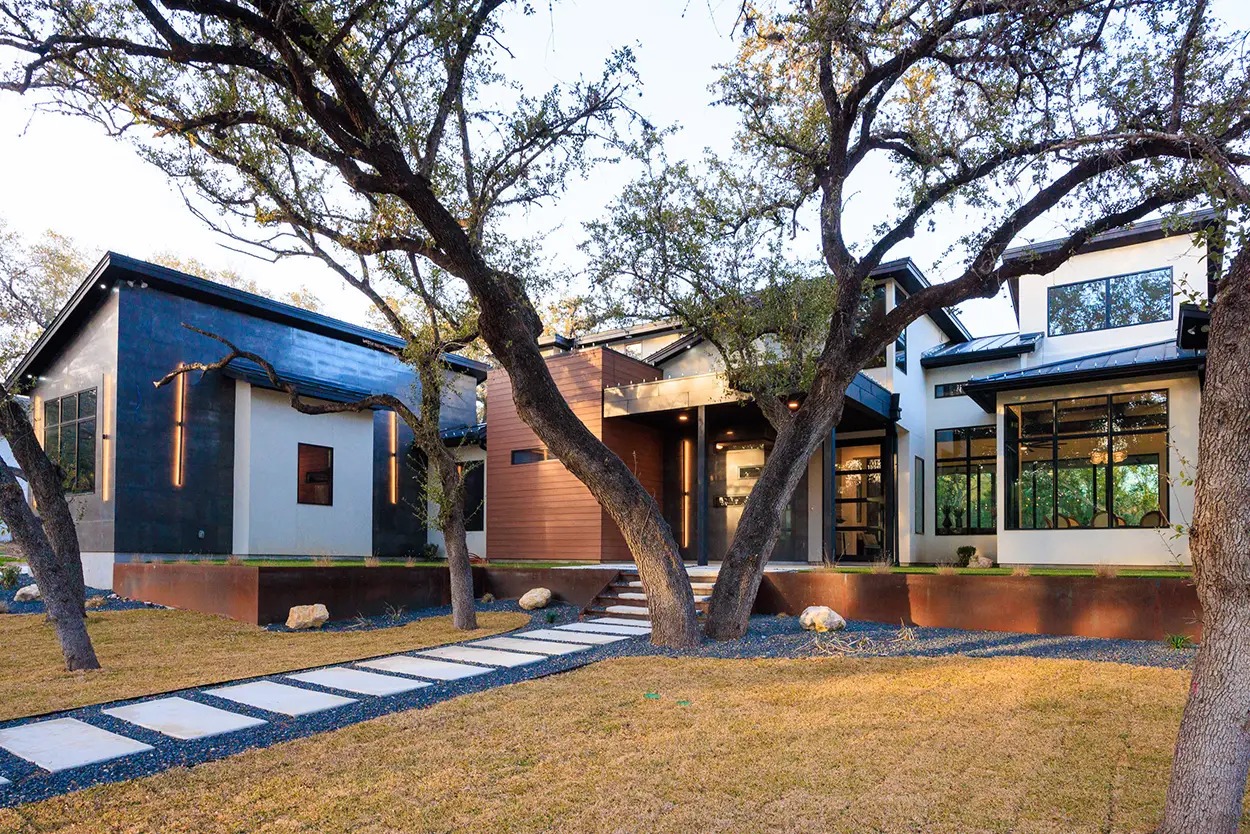
When calculating this percentage, ACCs typically exclude windows, doors, and gables, focusing strictly on the net wall surface area. Approved materials generally include:
Modern synthetic sidings, standard vinyl, and traditional wood lap siding are almost universally prohibited as primary exterior materials. However, high-durability fiber-cement products (like HardiePlank) are frequently permitted for accents, trim, and dormers, provided they do not infringe upon the primary masonry percentages.
Understanding these nuances before submitting your blueprints prevents your design from being rejected during the formal committee review.
The classic standing-seam metal roof has become synonymous with modern Texas Hill Country architecture. Beyond its undeniable aesthetic appeal, a high-quality metal roof offers exceptional durability against severe Central Texas weather, including high winds and heavy hail.
However, you cannot simply choose any metal panel or color. ACCs monitor roofing selections closely to prevent homes from creating blinding glares for neighbors or disrupting the natural color palette of the valley.
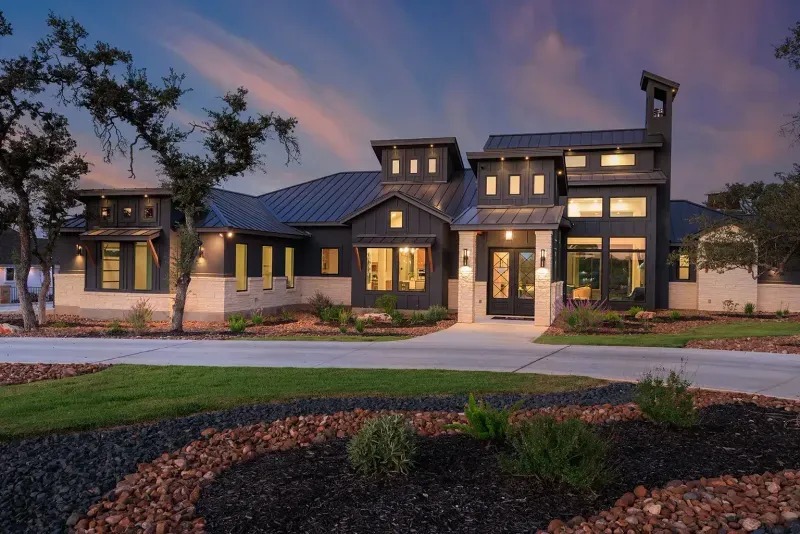
When designing your roofline, you must account for two primary ACC factors:
Bright, unpainted galvanized steel or highly reflective silver aluminum roofs are almost always banned in premium Hill Country developments. ACC guidelines frequently mandate the use of pre-finished, factory-coated steel panels that feature a low-gloss, matte finish. These coatings are strictly regulated to minimize solar reflectance indexes (SRI), protecting the visual comfort of the surrounding community.
To maintain an organic aesthetic, developers limit roofing colors to muted, natural tones. The table below outlines the standard allowances you can expect during the design selection process:
Before finalizing your material orders, your builder must submit physical metal color samples and manufacturer specification sheets directly to the ACC for formal sign-off. You can reference standard residential property frameworks and deed enforcement statutes via the Texas Property Code Chapter 202 to understand your legal rights and limitations regarding restrictive covenants.
Building a luxury home on a multi-acre lot gives you an incredible amount of breathing room, but it does not mean you can place your home anywhere you please. Property lines are governed by a complex web of legal setbacks, utility access routes, and strict environmental preservation rules.
Acreage communities enforce substantial building setbacks to preserve the open, rural feel of the development. It is common to encounter front-yard setbacks requiring the home to sit 50 to 100 feet back from the street, with side and rear setbacks ranging from 25 to 50 feet.
Furthermore, because the Hill Country is prone to flash flooding, properties often feature dedicated drainage easements or natural wet-weather creeks. Building permanent structures within these zones is strictly illegal under municipal code and county civil engineering rules.
The mature Heritage Live Oaks and Cedar Elms are the crowning jewels of Central Texas land. Damaging or removing them can result in massive financial penalties.
Municipalities like Boerne, New Braunfels, and San Antonio enforce stringent tree preservation ordinances. Any tree with a trunk diameter (DBH) exceeding a specific size—often 6 to 8 inches—is legally protected.
Deed restrictions and architectural guidelines should never stand in the way of building your dream home. When your design-build team possesses a proactive understanding of the 75% masonry rule, reflectivity limits, and local tree ordinances, the ACC review process transforms from a stressful legal hurdle into a smooth, predictable path toward breaking ground.
Whether you are looking to build in a strict master-planned community or want to evaluate the deed restrictions on a piece of raw acreage, we are here to guide your vision safely through every regulatory checkpoint. As one of Central Texas’ most reliable custom home builders, KC Custom Homes proudly serves San Antonio, New Braunfels, Boerne, Spring Branch, Bulverde, Dripping Springs, Canyon Lake, and Marble Falls. If you are ready to begin the conversation about your specific lot and vision, reach out directly through our Contact Page to schedule a site consultation.
To request a free quote, please fill the form below. Let us know what features you’re looking for in your next home and our experienced team will contact you shortly.