.png)
The dream of a Texas Hill Country estate often begins with the land. Perhaps it's a sprawling ten-acre parcel in Boerne, a rugged ridge in Canyon Lake with views that stretch for miles, or a quiet lot in a prestigious New Braunfels community. When you decide to get a home built on your land, you are embarking on a journey to create a sanctuary that reflects your success and your family’s legacy. However, the transition from owning a piece of Texas to standing in your finished kitchen can be a complex process.
The "Build on Your Lot" (BOYL) path requires a level of technical precision and local expertise that standard subdivision construction can’t match.
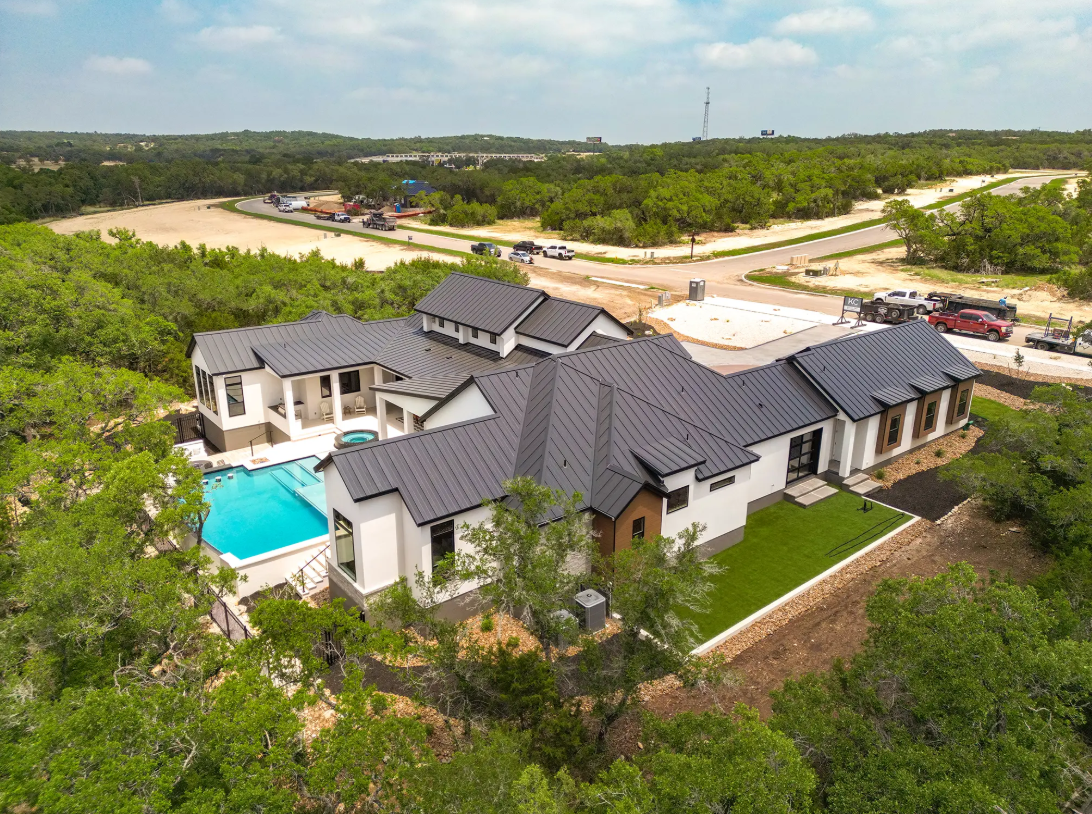
In a world of master-planned developments and production homes, a house built on your land stands apart. The primary driver for high-net-worth individuals in Central Texas is the desire for architectural autonomy. When you build a home on your land, you aren't forced to choose from a limited menu of floor plans that were designed for flat, generic lots.
Instead, the land dictates the design. This path offers a level of privacy and environmental integration that is simply impossible in a traditional neighborhood setting.
This process isn’t without it’s nuances, though. Key process steps for building a home on your land involve …
Building on your own land in the Texas Hill Country differs significantly from subdivision construction. Comal, Kendall, Hays, and surrounding counties each have distinct rules, terrain challenges, and utility requirements. This checklist guides landowners in New Braunfels, Canyon Lake, Boerne, Spring Branch, and Bulverde from lot evaluation to move-in.
Conduct a structured lot walk examining slope, trees, rock, views, and access. Combine this with surveys, soil tests, and builder/engineer consultations.
Order a geotechnical test ($800-$1,500, 1-2 weeks for results). In Comal and Kendall Counties, shallow limestone bedrock often requires drilled pier foundations instead of traditional slabs, adding weeks to foundation work and increasing structural costs. Texas A&M AgriLife Extension recommends soil testing for foundation design and septic sizing.
Many Hill Country fire districts require minimum 12-foot-wide driveways with specific turning radii for emergency apparatus. Plan driveway routes early with your builder and fire marshal input.
Lot evaluation essentials:

You need county development permits, septic approvals, fire code reviews, and HOA architectural sign-offs before construction starts. Processing times vary by jurisdiction.
In Comal County, development permits typically take 2-3 weeks with complete site plans, drainage calculations, and utility approvals. The Comal County Fire Marshal manages building permits and fire safety inspections.
Kendall County requires separate development permits for site work before building permit applications. Expect 3-4 weeks for complete plan review.
Septic permits require licensed sanitarian site evaluations. In areas with shallow rock or steep slopes, engineered aerobic systems replace conventional drain fields, adding cost and approval time. Comal County septic permits typically take 3-4 weeks after evaluation.
HOAs in communities like Cordillera Ranch and Vintage Oaks require 30-45 day architectural review periods. Many mandate minimum square footage (2,400-3,500 SF), exterior materials (often 50%+ stone or masonry on front elevations), and minimum roof slopes (6:12 pitch typical).
Permit checklist
The most critical phase of building custom homes built on your land in the Texas Hill Country happens before the first frame is ever raised. In our region, site preparation is a specialized trade.
In much of New Braunfels and Boerne, you aren't building on "dirt", you are building on solid limestone and caliche. When you have a home built on your land, your budget must account for rock milling. This process involves massive machinery with heavy-duty teeth that literally grinds the limestone down to a level, buildable pad.
Many BOYL home builders will give you a "standard" site prep allowance. In the Hill Country, a standard allowance is often insufficient. Always insist on a geological site walk-through before signing a contract. Understanding whether you need four inches or four feet of rock milling can save you tens of thousands of dollars in "unexpected" change orders later.
It is important to note that specialized excavation for the rocky Hill Country terrain is a major budget variable. Current regional benchmarks show that professional rock milling and grinding services in Central Texas typically cost between $180 and $425 per hour for heavy-duty machinery and experienced operators. Failing to account for this can lead to site-development overruns ranging from $10,000 to over $60,000 depending on the lot's geological profile.
The very vistas that make Canyon Lake and Boerne so desirable come with a steep price, literally. Homes on lots in these areas frequently occupy slopes that would be deemed "unbuildable" by less experienced contractors.
Building on a slope requires advanced engineering. This may involve a "suspended" structural slab or retaining wall system. The goal is to ensure that the house feels "tucked into" the hill rather than perched upon it. Proper drainage engineering is equally vital here; you must have a plan for where the water goes during a major Central Texas storm to prevent erosion from undermining your foundation.
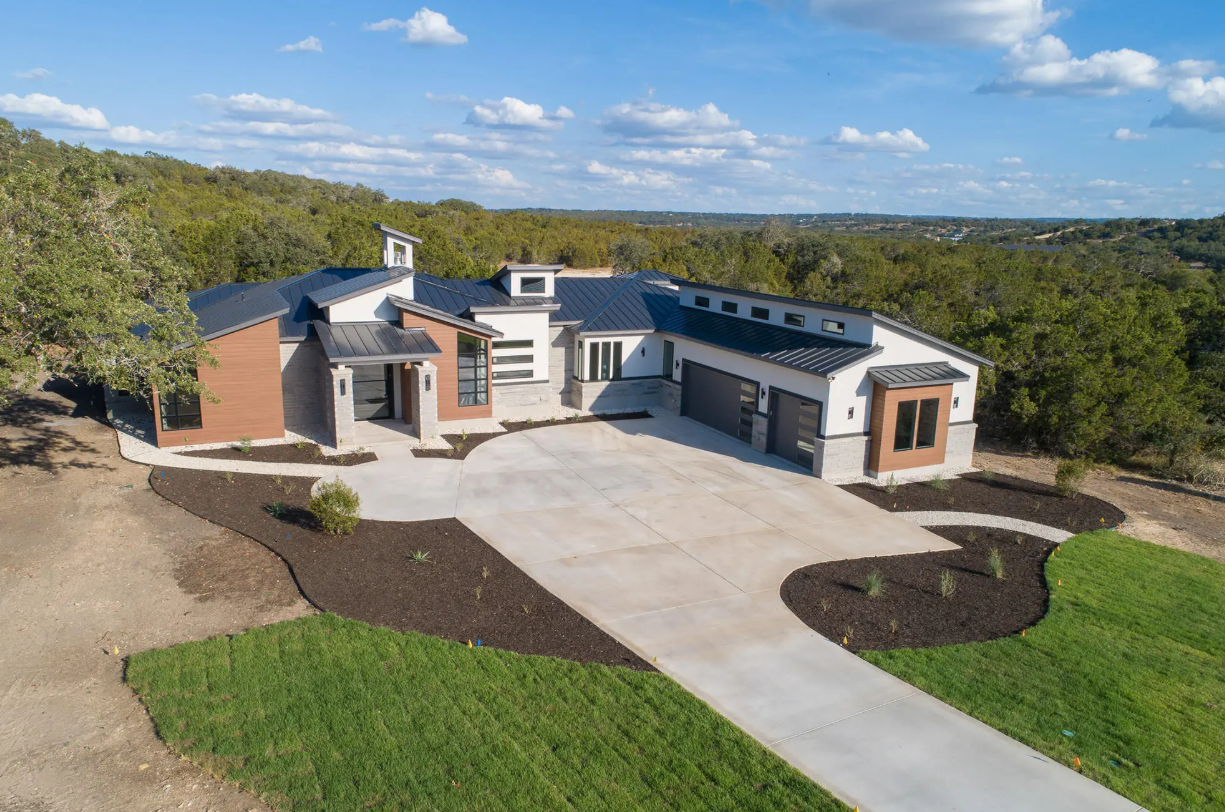
One of the most significant differences you’ll come across when you build a home on your land versus a pre-developed lot is the infrastructure needs. When you build a home on your own land, you are effectively acting as your own mini-developer.
Most luxury lots in the Hill Country are not serviced by city sewer. This means your home will require a private septic system. Because much of our region sits over the Edwards Aquifer Recharge Zone, the regulations are stringent.
Most high-end houses built on your land today utilize an Aerobic Treatment Unit (ATU). These are effectively "mini-treatment plants" that use oxygen to break down waste more efficiently than a traditional lateral line system. They are more expensive to install and require an ongoing maintenance contract, but they are essential for protecting the groundwater that sustains our region.
In 2026, the total investment for a standard residential Aerobic Treatment Unit (ATU) generally falls between $17,000 and $26,000. Beyond the initial installation, homeowners should budget for state-mandated annual maintenance contracts, which typically cost between $300 and $600 per year.
Bringing power, water, and high-speed data to a remote build site can be a logistical hurdle. If a city water line isn't available, you will need to drill a well into the Trinity or Edwards Aquifer. The depth of these wells can vary wildly even within the same zip code, making the "cost to build" a moving target until the bit hits the water.
Infrastructure logistics remain one of the most variable "soft costs" in a BOYL project. On average, utility installation on remote land in Texas costs approximately $20,400, with well drilling specifically ranging from $5,000 to $10,000 depending on the depth of the Trinity or Edwards Aquifer.
Even when you own the land, you may not have total carte blanche on all the decisions that can arise during a custom build. Premier communities like Cordillera Ranch, Vintage Oaks, or River Crossing have Architectural Control Committees (ACC).
When building a custom home on your land, a luxury builder will often act as your advocate in front of these committees. HOAs across many different areas can often dictate:
Choosing a custom home builder like KC Custom Homes that already has an established relationship with specific ACCs can shave weeks off your approval timeline.

Site prep ranges from modest grading to major excavation and walls. Total build costs must include these lot-specific expenses.
Tree clearing varies widely: $2,000-$8,000 typical for 1-2 acre lots. Protected oak removal requires arborist permits at $500-$2,000 per tree.
Rocky lots face additional costs: blasting ($8-$15 per cubic yard), drilled pier foundations, retaining walls ($35-$75 per square foot of wall face), and drainage systems with French drains and catch basins.
Driveways average $8-$15 per linear foot for gravel and $18-$35 per linear foot for concrete, excluding culverts. Rural lots often need 200-600 foot driveways from road to building site.
Rural allowances include propane tanks ($1,500-$3,500 installed), utility trenching ($3-$8 per linear foot), gates and entry features, and wildlife-friendly fencing ($8-$18 per linear foot).
When you’re in the process of building a luxury custom home, financial transparency is paramount. Many builders offer a "Fixed-Price" contract, which sounds secure. However, in a BOYL project, a fixed-price contract often contains a long list of "Allowances" for things like flooring, fixtures, and, most dangerously, site prep.
A truly custom approach is a transparent "Cost-Plus" or a "Tiered Fixed-Fee" model. This allows you to see the actual cost of every beam, stone, and hour of labor. It ensures that when you invest in a premium feature, like a hand-forged iron front door or professional-grade appliances, you are paying the actual cost, not a marked-up "upgrade" fee.
The Texas Hill Country’s ecosystem is very unique. Selecting the right partner to build a home on your lot will require finding a team that understands the "micro-climates" of Central Texas. This local knowledge is what allows us to produce the results you see in our Gallery. It’s about building a home that doesn't just sit on the land but belongs to it.
When you decide to have a home built on your land, patience is an essential part of the process. The timeline for luxury BOYL project can fluctuate depending on a number of factors, however, it typically follows the following cadence:
While this timeline is longer than a production home, the result is a residence that is perfectly tuned to your life.
While the U.S. Census Bureau reports a national average of 9.1 months for standard single-family homes, custom-built estates require a more deliberate pace. In 2026, luxury custom builds typically require 12 to 18 months for completion, as the supply chain for premium finishes, like custom-forged iron or imported stone, often includes lead times of 12 to 20 weeks.
KC Custom Homes uses a documented process guiding clients from initial meetings through warranty coverage.
Building on your own land is the ultimate way to ensure your home is a true reflection of your values. It's a process that rewards those who prioritize quality, engineering, and local expertise.
If you are ready to move from the "dreaming" phase to the "doing" phase, the first step is a realistic understanding of the investment. We encourage you to review our TX Custom Home Building Cost Guide to see current market realities for luxury builds in Central Texas.
As one of Hill Country's most trusted custom home builders, KC Custom Homes proudly serves San Antonio, New Braunfels, Boerne, Spring Branch, Bulverde, Dripping Springs, Canyon Lake, and Marble Falls. Whether you already own your perfect acre or are just starting your search, having the right team in your corner makes all the difference. When you are ready to discuss your vision for the perfect Hill Country sanctuary, we invite you to visit our Contact Page to schedule a site consultation.
Site prep ranges from $15,000 for gentle, cleared lots to $75,000+ for steep, rocky terrain. Builders should provide line-by-line estimates covering clearing ($2,000-$8,000), grading, walls ($35-$75 per square foot), drainage, utilities ($3-$8 per linear foot for trenching), and driveways ($8-$35 per linear foot) after reviewing specific lot conditions.
Geotechnical tests cost $800-$1,500 and take 1-2 weeks for results. Engineers and builders use results to design appropriate foundations and septic systems. Shallow bedrock may require drilled pier foundations instead of slabs, adding 2-3 weeks to foundation phases.
HOAs typically regulate minimum square footage (2,400-3,500 SF in Hill Country communities), exterior materials (often 50%+ stone or masonry on front), roof slopes (6:12 minimum pitch common), fencing, and outbuildings. Budget 30-45 days for architectural review after submitting complete plans and material samples.
Rural tracts in Comal, Kendall, and Blanco Counties may allow barndominiums without deed restrictions, but HOAs and cities typically restrict them. Most gated communities prohibit metal exteriors or require wrapping in approved materials. Verify deed restrictions, county regulations, and zoning before designing barndominium plans.
Per-square-foot costs vary widely based on design complexity, materials, site conditions, and outdoor spaces. Set a total budget and discuss priorities with your builder. They can shape size, features, and finishes to align with goals and budget. A 2,500 SF home on flat lots has different total costs than identical floor plans on steep, rocky sites requiring extensive walls and grading.
Areas over the Edwards Aquifer recharge zone require Water Pollution Abatement Plans and additional erosion controls, adding $2,000-$5,000 in engineering and 2-3 weeks to permit timelines. Requirements include engineered stormwater controls, vegetation preservation, and specific construction practices near karst features. Comal, Hays, and parts of Bexar County have the most stringent regulations.
To request a free quote, please fill the form below. Let us know what features you’re looking for in your next home and our experienced team will contact you shortly.